ZooAmerica Recognizes Endangered Species Day 2024
Conservation is Key Responsibility of the 11-Acre Zoo in Hershey
Every year, the third Friday in May marks Endangered Species Day to recognize and take action to protect threatened and endangered species. Endangered Species Day 2024 is May 17, 2024. As an accredited facility through the Association of Zoos and Aquariums (AZA), ZooAmerica North American Wildlife Park in Hershey, Pa., reflects on the importance of restoring endangered species and protecting all wildlife, not just today but every day.
ZooAmerica has prioritized endangered species throughout its history by supporting several ex-situ breeding programs, including the Thick-Billed Parrot Species Survival Plan (SSP). According to the International Union for Conservation of Nature (IUCN), only 840-2,800 mature individuals remain in the wild, and 70 thick-billed parrots in AZA facilities.
ZooAmerica is home to four endangered thick-billed parrots, coordinated by the AZA.
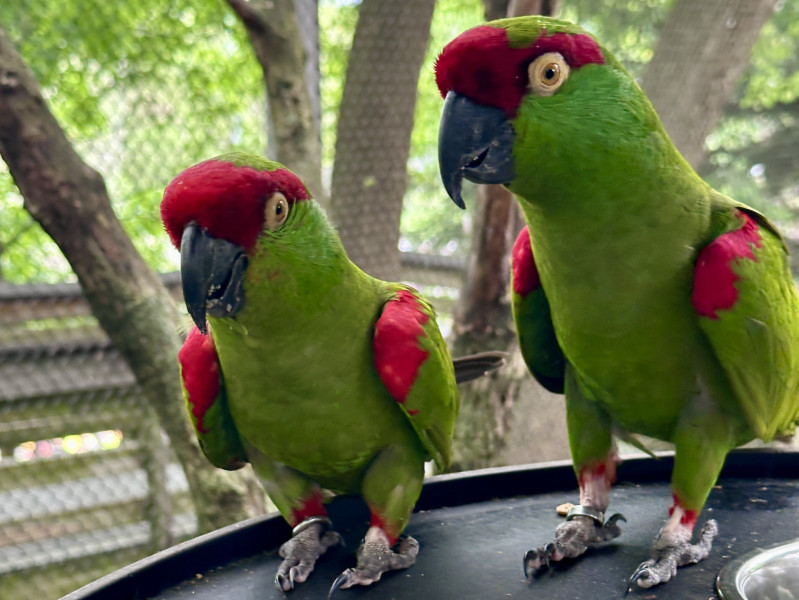
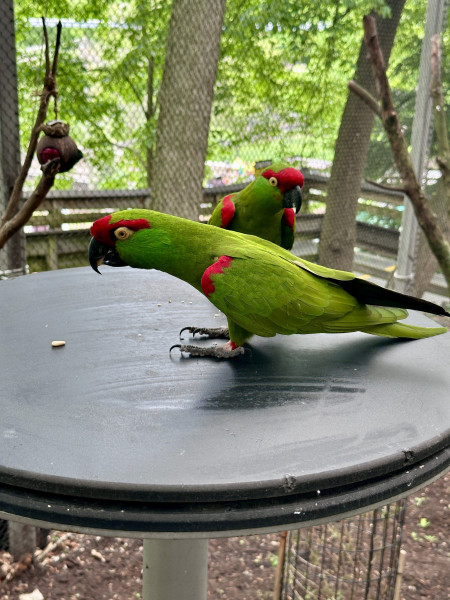

About Thick-Billed Parrots
In the wild, thick-billed parrots require the specialized habitat of a mature pine-oak forest for nesting and food. Their thick bills shred pine cones to reach the seeds, and bright green feathers camouflage them amongst the pine needles.
Although their range once included the mountains of southern Arizona and New Mexico, they are now found only in the mature pine-oak forests of northwestern Mexico. Loss of suitable habitat resulted in a drastic decline in their numbers, and they were listed as endangered species in 1973. Along with the now-extinct Carolina parakeet, thick-billed parrots are one of only two parrot species whose natural range once included the United States.
Thick-Billed Parrot Conservation Efforts
ZooAmerica has had past success with parrot breeding—eggs hatched in 2001, 2011, 2013, 2014 and 2015. The Zoo keeps the chicks until they are 3-5 years old. They may then be sent to other zoos to breed or remain with a new partner.
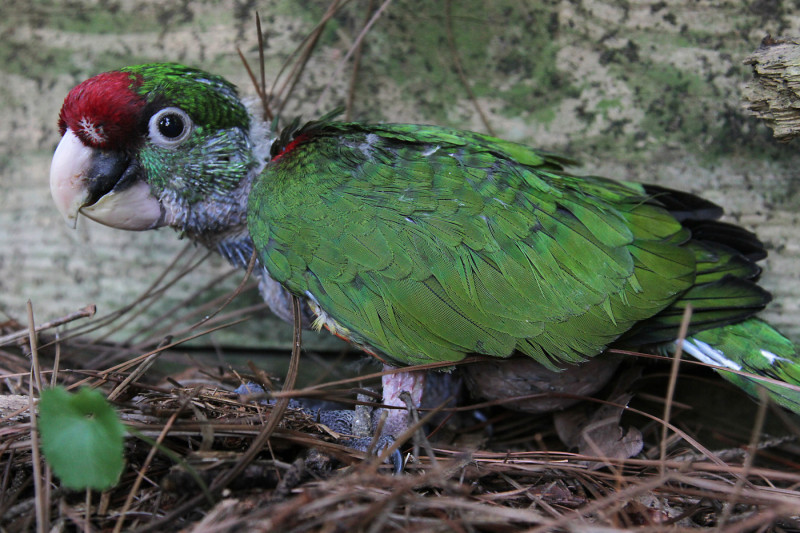
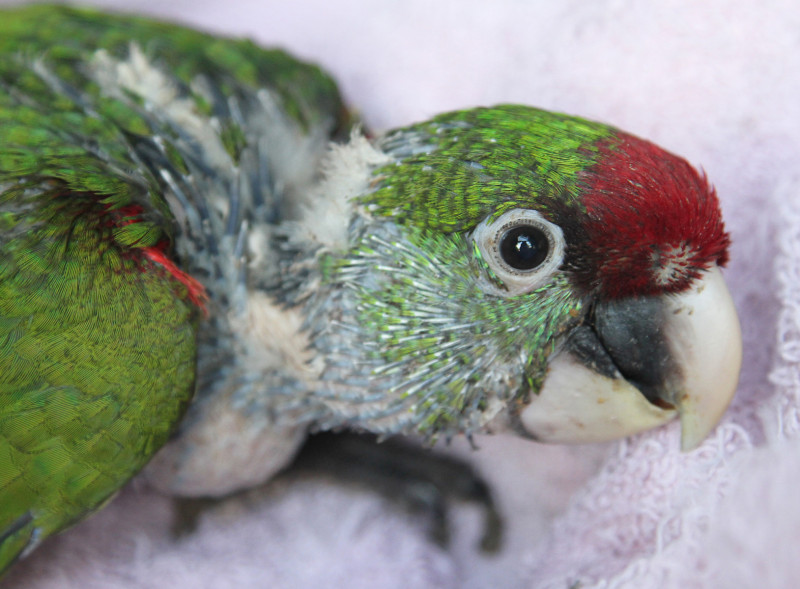
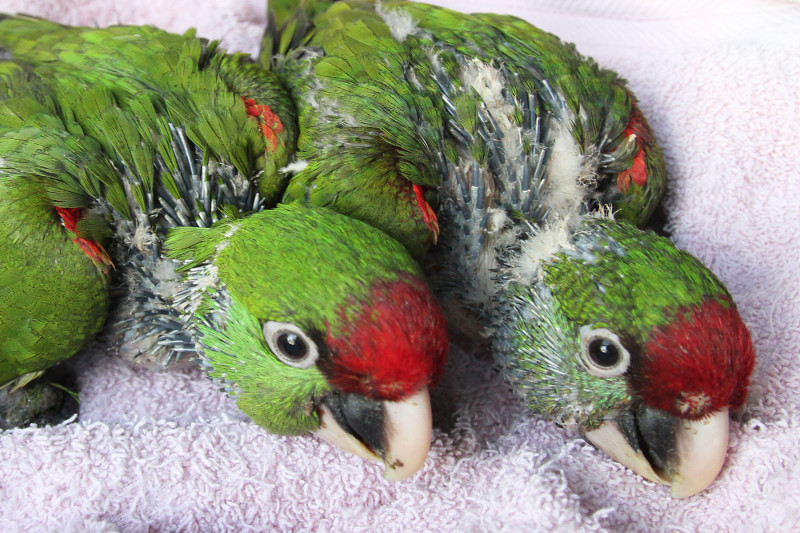
In 2019, ZooAmerica traded parrots with other zoos to create two new breeding pairs. Given that the newer breeding pairs have yet to produce chicks, the team consulted with Melissa McCartney, the thick-billed parrot coordinator at the Sacramento Zoo, and created a new plan. When the two males and two females were initially introduced in 2019, they could select their partners. Based on their mate selection, the collective team moved Princess and Rio to a behind-the-scenes area and kept Tyler and Nikki in the thick-billed habitat. Without competition from the other pair, the hope is that they will produce viable offspring in August. If neither pair produces young, all four parrots will reunite in late September.
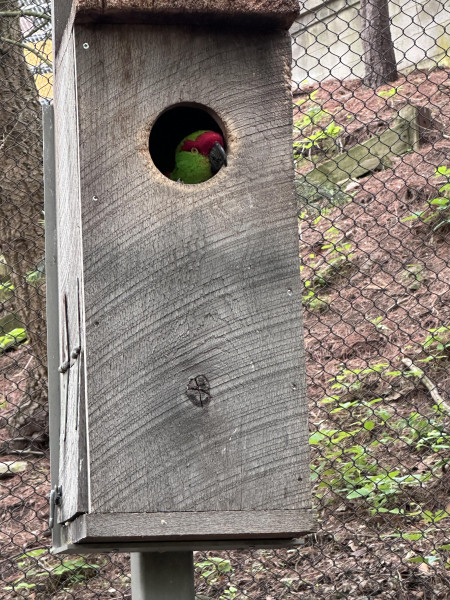
Since the parrot pair separation in April, Nikki and Tyler have already been observed strengthening their bond. If visitors do not see either parrot in the thick-billed habitat, they are likely in a nest box. While there are no guarantees, the ZooAmerica team hopes to provide these endangered birds with the best opportunities to create a family in the future and preserve their species for generations to come.